
Capture and follow through
Turn each meeting into a clear step rather than a one off event
Even with a clear narrative and agenda, industrial finance conversations can lose momentum if follow up actions and open questions are not recorded in a way that survives beyond the meeting. To address this, Thravineo suggests capturing three short lists after each major discussion: decisions made, assumptions noted, and items to validate. Keeping these lists concise and linked to your operational data makes it easier to brief new stakeholders, revisit earlier reasoning, and adjust plans when market conditions or regulatory expectations evolve. Over time, this habit can turn scattered meetings into a more coherent, traceable decision trail for your facility.
Check in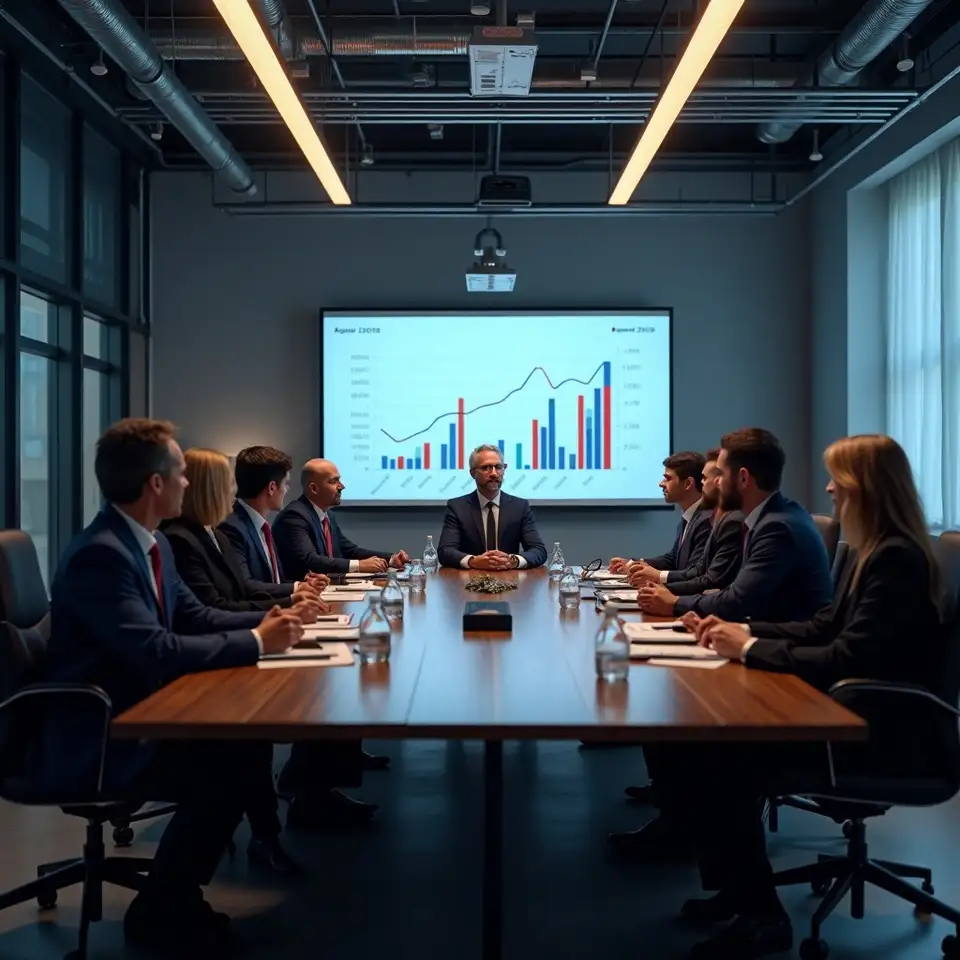
Shape the discussion
A simple agenda structure for complex industrial finance meetings
Once you have translated your operational context into themes that resonate with reviewers, the next challenge is structuring the conversation itself. Many teams arrive at important discussions with stacks of data but no shared outline, which makes it hard to separate facts from assumptions. Thravineo recommends a straightforward agenda built around three questions: what is happening now, what could change, and what would that mean for risk and resilience at your facility. By framing each agenda point with both operational and financial notes, you can guide the room through a logical sequence rather than reacting to scattered questions. This does not remove uncertainty, yet it often reduces confusion and helps everyone see why certain trade offs are being considered.
Ask usPractical scenarios

Phased retrofit discussions
When a facility considers a phased retrofit, each step interacts with production targets, maintenance schedules, and available review windows. This scenario shows how mapping those phases on a single timeline, along with key operational constraints, can support more grounded discussions about resource allocation and timing without assuming a particular outcome.

Evaluating capacity changes

Life extension versus replacement

Coordinating across sites
Multi site industrial operations often face the challenge of coordinating decisions across plants with different ages, technologies, and local regulations. This scenario demonstrates how creating a common template for summarising each site’s context can support more consistent, well documented conversations about priorities and sequencing of major projects.
Applying industrial finance thinking inside your facility

From scattered data to structured industrial finance conversations
This page builds on the idea that you already track a great deal of data but may not be using it in ways that support finance focused discussions. We outline how to group technical details into a few core themes that matter for reviewers, such as asset condition, regulatory exposure, and flexibility in scheduling outages. By structuring your information this way, you can reduce back and forth with advisors, keep internal memos concise, and make it easier for decision makers to see the trade offs behind each scenario you present.
Nothing here is personal advice or a recommendation to pursue any particular arrangement. Facilities differ widely in safety requirements, labour agreements, and regional regulations, and those differences can materially affect outcomes. Use this content as a framework for internal thinking and as preparation before speaking with qualified professionals who know your complete context. Past performance does not guarantee future results, and any financial decision involves uncertainty. Our role is to help you see that uncertainty more clearly, not to remove it.
Trying to relate broad financial commentary to the reality of pumps, conveyors, and shift rosters can be discouraging when every example seems written for office based businesses. On this page, Thravineo focuses specifically on the questions that arise once you already understand the basics of industrial finance but still struggle to apply them to your own facility. We explore how market dynamics interact with maintenance backlogs, how project timing shapes internal approvals, and how resource allocation choices can be framed so that operational and financial stakeholders are working from the same picture. The aim is not to tell you what to decide, but to make each decision point easier to describe, document, and revisit as conditions change around your plant.
How Thravineo supports ongoing industrial finance decision making

Connect operations and analysis
Bring plant level detail into higher level finance discussions
It is easy to feel that industrial finance decisions are made far from the plant, in rooms where few people truly understand your equipment, safety rules, or maintenance backlog. Thravineo approaches this differently by starting with your on site reality and then mapping it to the questions reviewers are likely to ask. On this page, you will see how to group operational facts into a handful of themes that matter for financial discussions, such as reliability, flexibility, and regulatory exposure. By doing this, you can walk into meetings with a concise story that respects both your technical constraints and the analytical needs of decision makers, without oversimplifying what happens on the shop floor.
Start a conversation